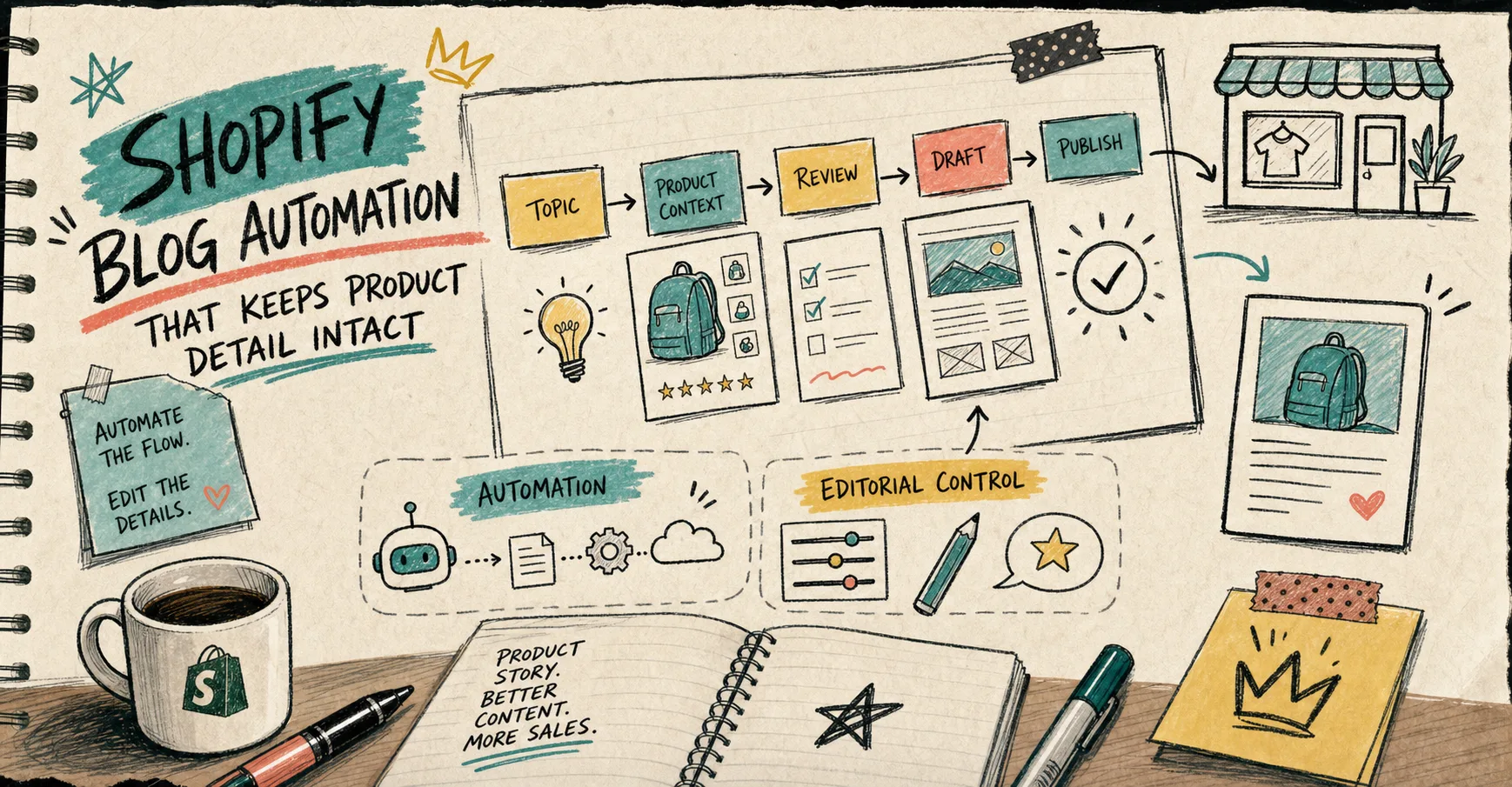
How to Build a Shopify Blog Workflow That Keeps Product Detail Intact
I keep seeing the same failure mode in Shopify content: the store wants SEO, the team asks for automation, and the result is a blog post that sounds polished but not specific enough to help a buyer. The topic is there. The product context is missing.
Supra Blog Automation is built for that gap. It is a Shopify app for generating, scheduling, optimizing, and publishing SEO-focused blog posts, and it lets you decide how much control you keep along the way. You can generate a single post or set up recurring automations, add product context, use AI-generated or product-based visuals, and publish immediately or save as draft. The product page is Supra Blog Automation and the Shopify listing is here.
If your posts are starting to feel generic, the fix is not to write more. It is to make the workflow more specific.
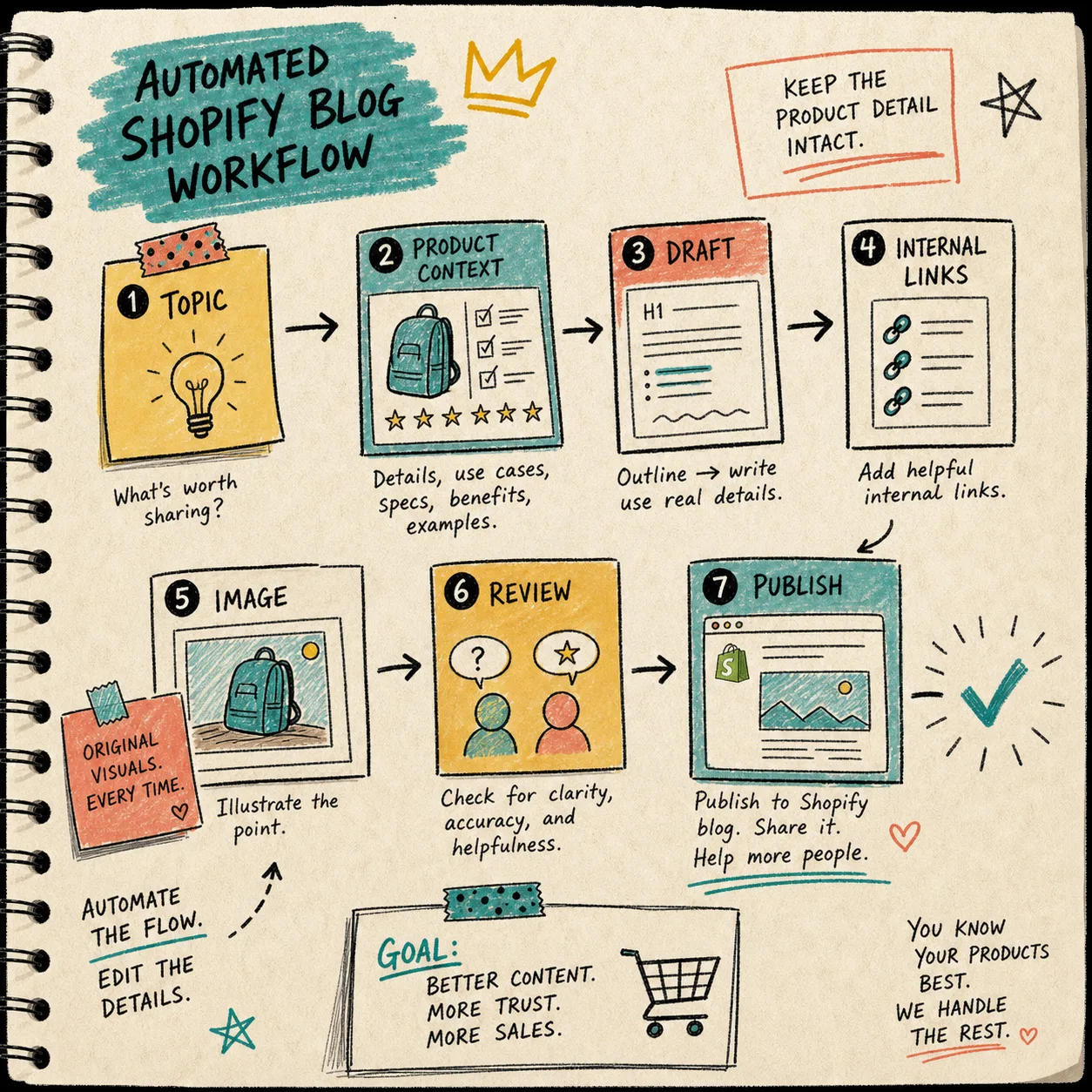
1. Start With Product Detail, Not A Blank Prompt
A Shopify blog post gets better when the brief already knows what matters. That means the generator should see the product, the customer problem, the tone, the image direction, and the review rule before it starts writing. If the workflow only sees a keyword, it fills the gaps with broad advice and safe filler.
I like to start with a short brief that answers five questions:
- What product or collection is this post supporting?
- What problem is the reader trying to solve?
- What should the post help the reader do next?
- What tone should the article keep?
- Should the first pass publish now or sit as a draft?
That one step changes the rest of the pipeline. It keeps the draft close to the actual catalog instead of drifting into vague ecommerce advice. It also makes the article easier to review because the intent is clear before the first sentence is written.
If you want the scheduling version of this idea, How to Build a Product-Aware Shopify Blog Workflow That Publishes on Schedule stays close to the operational side. For the brief-writing side, How I Write Shopify Blog Briefs That Keep Product Detail Intact is the cleaner companion. If you want the broader systems view, How to Build a Shopify Blog System That Publishes Better Posts on Schedule shows how the calendar fits around the drafting step.
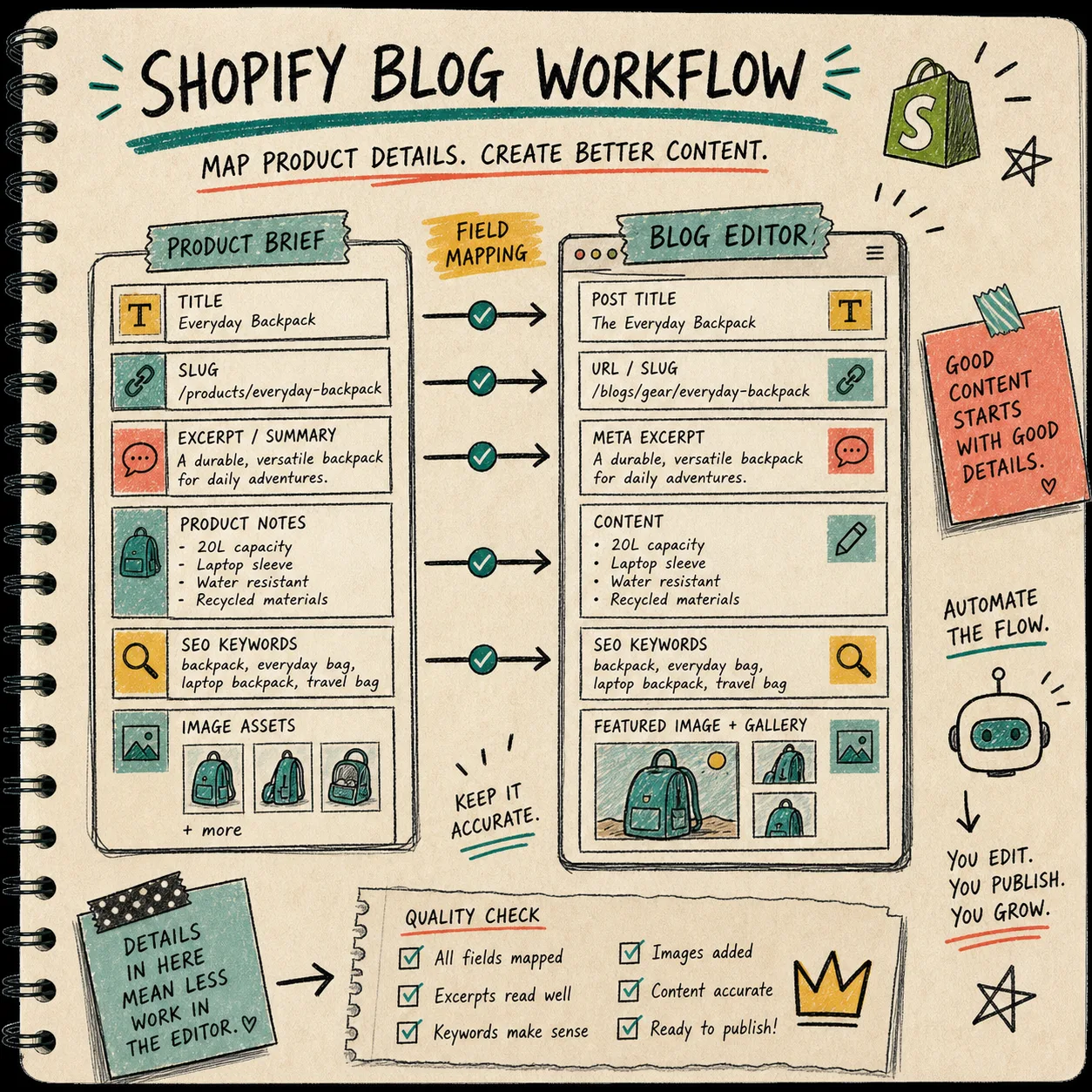
2. Map The Fields Once And Stop Rebuilding Them
This is the part that keeps the workflow from turning into copy-paste chaos.
I usually map the same core fields every time:
- Title.
- Slug.
- Excerpt.
- Product notes.
- SEO target.
- Internal links.
- Image source.
- Publish mode.
The exact field names do not matter as much as the discipline. The generator needs a stable shape so it can translate product detail into a post without inventing new facts. A good mapping also makes the article feel repeatable. Once the structure is right, the only thing that changes is the content itself.
A useful test is to read the post without looking at the product page. If the article still sounds coherent but never names the thing it is promoting, the workflow is too vague. If it reads like the product actually informed the writing, you are close.
3. Use Internal Links To Make The Post Worth Continuing
Internal links should help the reader keep solving the same problem. They should not feel like filler or backlink theater.
On this topic, I would link where the next question naturally appears. If the reader wants a tighter warning against vague copy, send them to How to Keep a Shopify Blog Publishing Without Generic AI Drafts. If they need the workflow angle, How to Automate Shopify Blogging Without Losing Product Detail stays close to this exact tradeoff. If they want a higher-level operating system for the same problem, How to Build a Product-Aware Shopify Blog Workflow That Publishes on Schedule and How to Build a Shopify Blog System That Publishes Better Posts on Schedule both carry the same discipline in a wider setup.
That is the point of the links. They should make the blog feel like a working notebook: one post opens the door, the next post keeps the reader moving through the same system.
4. Keep The Review Step Small And Strict
Automation gets risky when it removes judgment. The cleaner move is to keep the writing flow fast and keep one short review step for anything that matters.
I would save as draft when the post includes:
- pricing or plan references;
- product claims;
- policy details;
- brand-sensitive wording;
- anything I have not checked against the source material.
That is where the publish control matters. Supra Blog Automation supports both immediate publishing and saving as draft, so you can choose the level of caution the post deserves. For low-risk posts, publish immediately if the brief is strong and the facts are already settled. For anything sensitive, land the draft first and do a quick human pass.
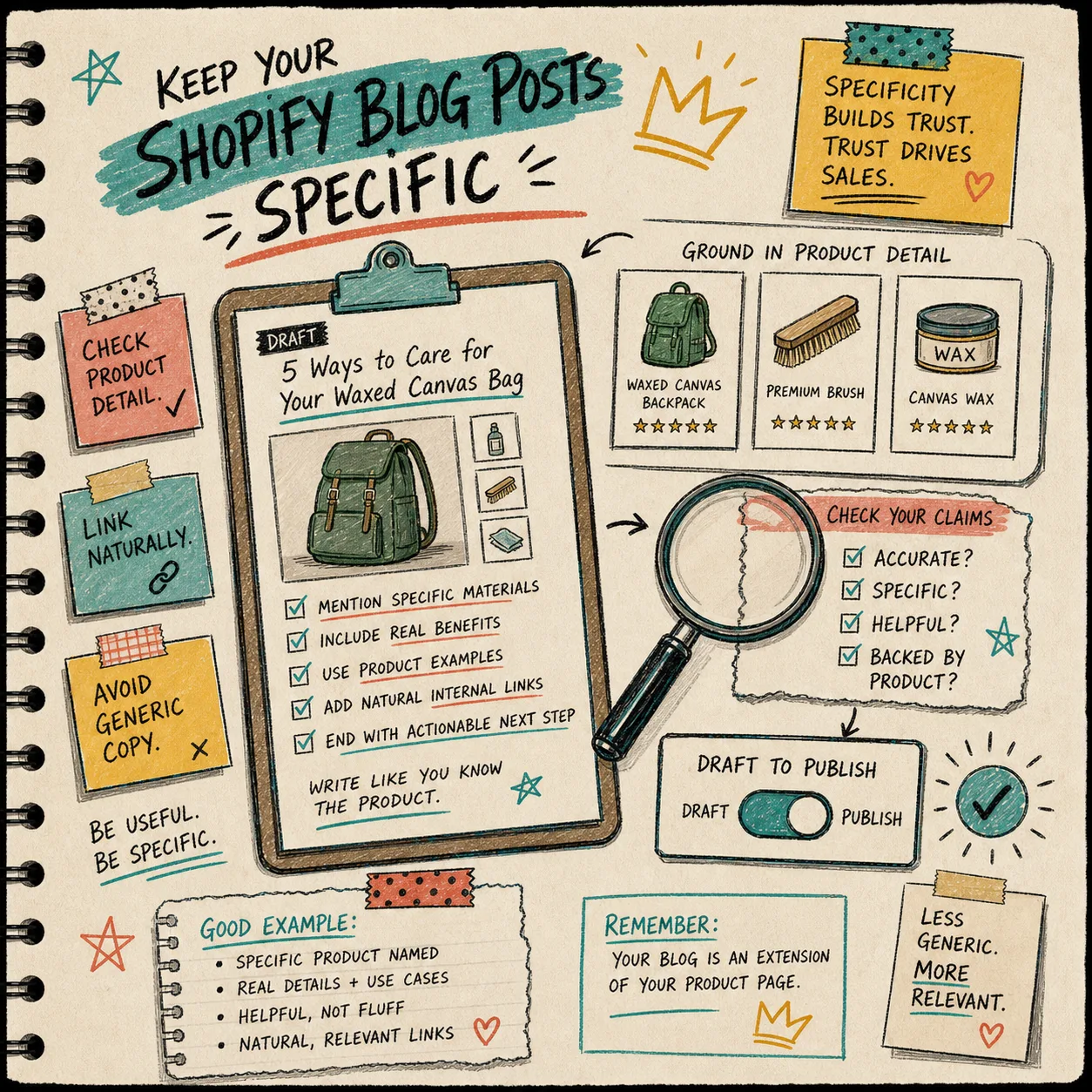
The right review checklist is short:
- Is the product detail accurate?
- Do the links feel natural?
- Do the images support the section they sit in?
- Does the ending tell the reader what to do next?
5. Give The Workflow A Calendar So It Actually Ships
A good workflow is useless if it only runs once.
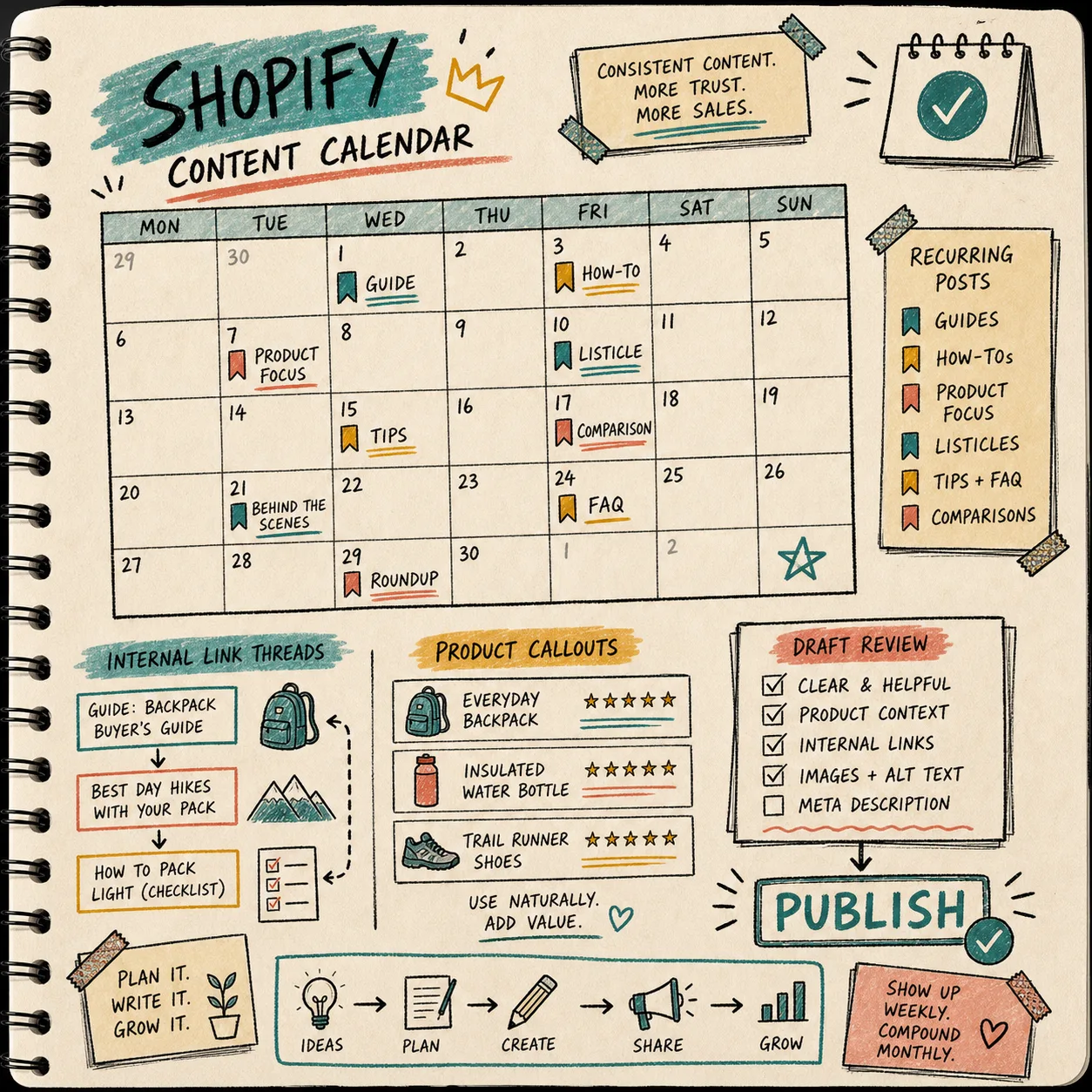
If the goal is steady organic traffic, the blog needs a rhythm. A recurring content calendar gives the site a pattern the team can keep up with: product education, comparison posts, buying guides, seasonal content, and one-off support articles when a product needs more context. Supra Blog Automation supports recurring automations, so the calendar can keep moving while you are busy running the store.
That matters because content systems do not fail from a lack of ideas. They fail because the process asks for too much manual work each time. A calendar turns the work into a repeatable loop instead of a fresh decision every week.
Bottom Line
The shortest path away from generic AI copy is not a bigger prompt. It is a better workflow.
Start with product detail, map the fields once, link to related posts only when they genuinely help, and keep a draft review step for anything that could go sideways. That combination is enough to turn Shopify blog automation into something useful instead of something noisy.
If you want to try it, start with one product, one article, and one review pass. Then use Supra Blog Automation to generate the first draft and only publish when the details line up.